

Behavioural consultations for canine behavioural challenges
Personalised online behavioural consultations, supporting dogs and their families across the UK. Through a force-free, compassionate approach, we help you understand your dog’s behaviour and build a practical plan around their needs and your everyday life. We support with a variety of issues including: reactivity, hyperactivity, separation anxiety, housetraining, resource guarding, mouthing & biting and more.
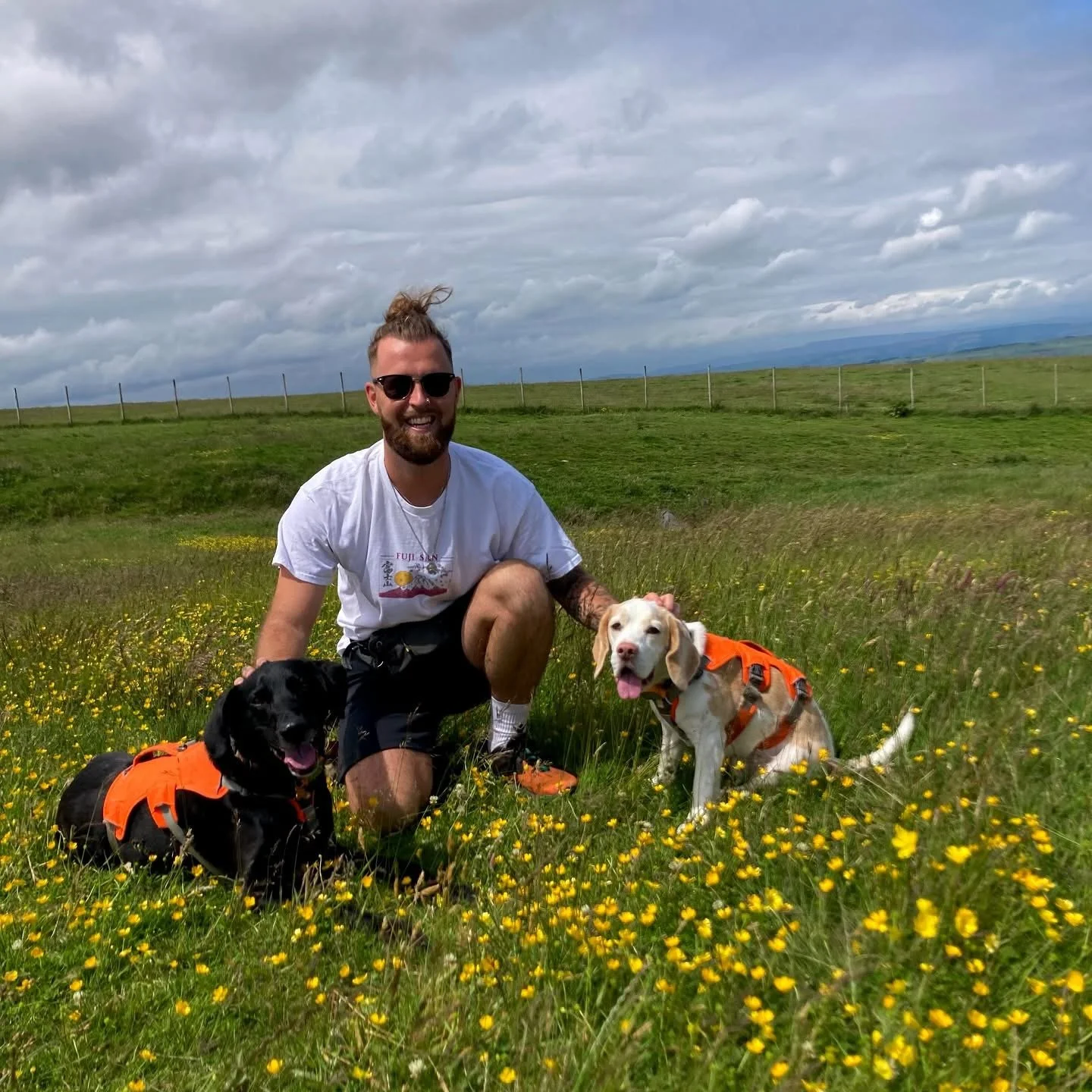
When your dog is struggling, it can feel overwhelming, confusing, or even heart-breaking. You want your best friend to feel calm, confident and happy, and so do we. Martyn’s Mutts was founded under the ethos of helping owners and their dogs live their best lives. At Mutts Minds, we’re here to help you understand your dog’s behaviour and work together to achieve just that.
Pricing
What’s Included?
How it Works
-
![Illustrated weekly calendar with crossed-off days and a green circled date]()
1. Book
Choose a date and time for your online consultation and secure your booking with full payment. You’ll receive a confirmation email with your appointment details and Google Meet link.
-
![Black document icon with a folded corner and three bulleted list lines]()
2. Details
Complete our detailed pre-consultation form at least 3 days before your consultation, sharing more detail about your dog’s behavioural challenges. These details help us better design a personalised action plan to discuss with you at your consultation.
-
![Checklist icon on a clipboard with three checked boxes and list lines]()
3. Prepare
We’ll prepare our initial plan based on the details from your pre-consultation form. Our preparation helps make the most of your consultation, with more time for discussion, practical guidance and questions.
-
![White video camera icon inside a black circle]()
4. Consultation
During your 60-90 minute online consultation, we’ll explore what might be driving your dog’s behaviour and talk through practical ways forward. Together, we’ll refine our action plan into something that works for you.
-
![Black speedometer icon with motion lines and four stars above it]()
5. Action
Within 72 hours, you’ll recieve your personalised written action plan and support toolkit to put your next steps into practice. Share updates with us along your journey, with optional follow-up consultations available as you progress (£120 per session).





Why Online?
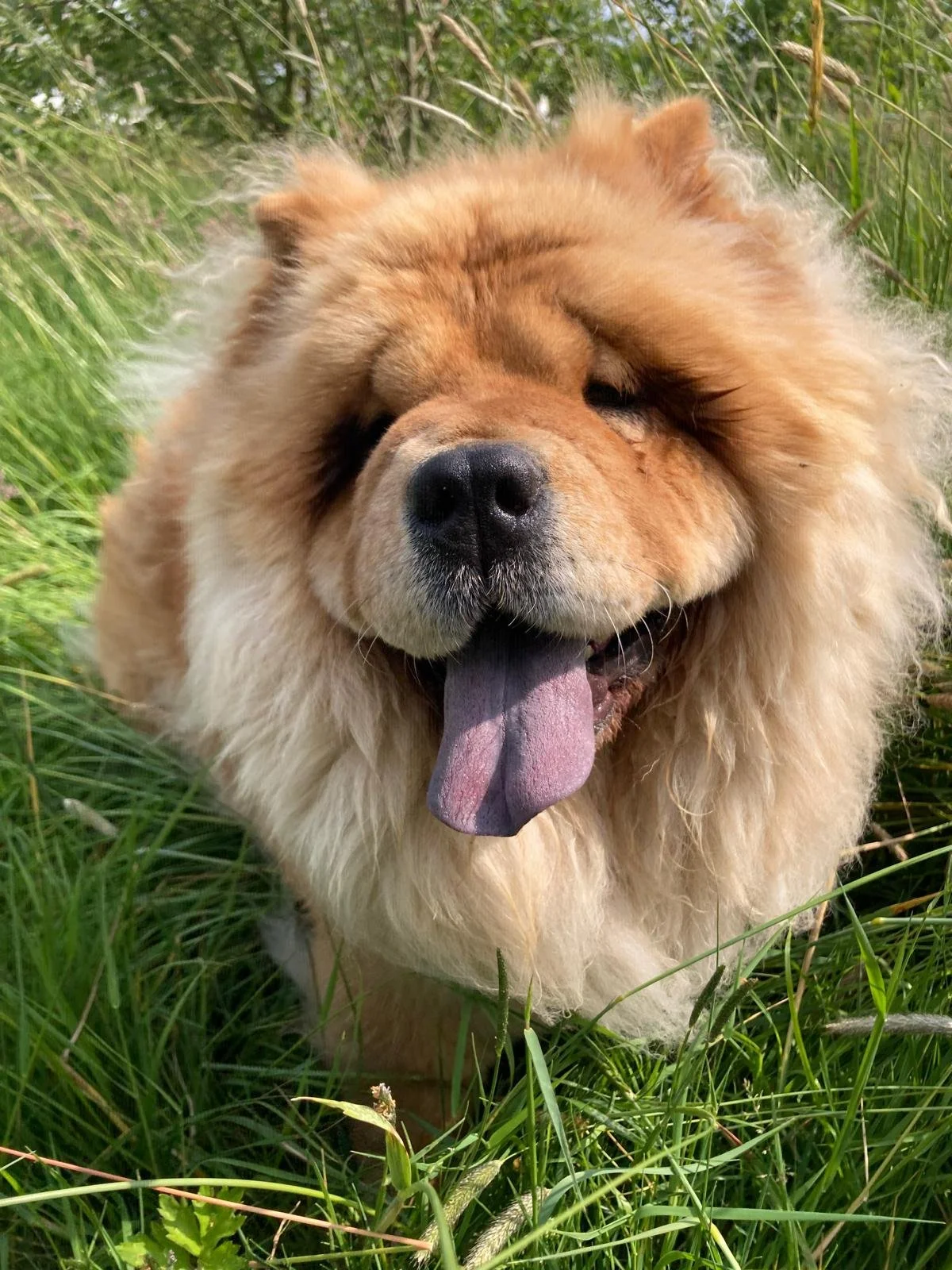
Online consultations allow us to focus on your dog’s needs without adding the pressure of an unfamiliar visitor in their home. Our detailed pre-consultation form helps us understand your dog’s behavioural challenges and prepare beforehand, so you can spend more of your consultation understanding your dog’s behaviour and exploring practical ways forward, with fewer distractions. Where helpful, videos of everyday situations offer insight without deliberately putting your dog in situations they find difficult. It also means more families across the UK can access our expertise, wherever they call home.
Whatever the behavioural challenge, we’re here to help
Whether you're dealing with a specific behavioural issue or just want to better understand your dog’s emotional world, we offer compassionate, personalised support in areas such as:
-
![White silhouette of a megaphone projecting sound waves on a black background]()
Reactivity
Reactivity is a common behavioural challenge where a dog overreacts to certain triggers such as other dogs, people, bicycles or specific environments. This often manifests in barking, lunging or growling. This behaviour is often rooted in fear, frustration or insecurity.
-
![White silhouette of a horned bull charging and breaking through a paper surface on a black background]()
Separation-related problems
Many dogs struggle with being left alone, leading to distress behaviours such as barking, whining, destructive chewing or toileting indoors. This isn’t about “naughtiness”, its often a sign of anxiety or confusion about being apart from their human.
-
![White silhouette of a horned bull pulling a small wagon on a black background]()
Resource guarding
Resource guarding occurs when a dog feels the need to protect something they value, such as food, toys or even a person. They may freeze, growl or snap to keep others away. It’s a natural canine behaviour, but it can cause stress or conflict in a home environment.
-
![White silhouette of a crouching cat stretching on a black background]()
Fear and anxiety
Dogs can develop fears of specific objects, noises (like fireworks or hoovers), people, situations or places. Chronic anxiety can manifest in more subtle ways, like constant pacing, panting, drooling or avoidance.
-
![White silhouette of a leaping kangaroo on a black background]()
Overarousal and hyperactivity
Some dogs struggle to regulate their excitement, leading to jumping, mouthing, barking or an inability to settle down. This can be frustrating for owners and confusing for the dog, who often just needs help managing their emotions.
-
![White cartoon rabbit curled up asleep on a black background]()
Generalised stress and lack of confidence
Dogs who are constantly on edge, easily startled or reluctant to explore new things may be struggling with generalised stress or low confidence. These dogs may seem “shut down” or overly sensitive to everyday situations.






Our Behavioural Philosophy
At the heart of Martyn’s Mutts is a commitment to force-free, positive reinforcement methods. We believe that every dog deserves to be treated with kindness and respect and that behavioural change comes through building trust, not fear.
Rather than relying on outdated dominance models or punitive techniques, we work with dogs to understand the root causes of their behaviour. Whether it's anxiety, reactivity or fear based responses, our goal is to help dogs feel safe, confident and empowered to make better choices. This means:

No aversive tools or punishments
We don’t use shock collars, choke chains or intimidation.
Science based methods
We rely on modern behavioural science, focusing on motivation and reinforcement.
Empathy for both dogs and owners
Behavioural challenges can be overwhelming. We’re here to support, not judge.


Willow’s Mum, Cheryl
"I can't praise Martyn enough. I have recently rescued a lovely little pomeranian but she didn't arrive without her issues, she is very reactive to other dogs cars and people and I was really beginning to worry about her future. The transformation in just 4 days working with Martyn's plan is nothing more than amazing. Although Willow has a long way to go I'm sure our continued work with Martyn will get the results we all want for Willow. I would highly recommend Martyn."
Tilly’s Behavioural Journey
What does a Martyn’s Mutts Behavioural Consulation look like?

Meet Tilly, a 10 year old Jack Russell Terrier who’s already had a few chapters in her life. She was most recently under the care of Rochdale Dog Rescue & is now settling into her new forever home after a tough start.
She’s sweet, loyal, food obsessed & full of personality, but she’s also been carrying a few worries since arriving. Here’s what we are helping her & her family with:
Certified in:
-
Understanding Canine Communication: Exploring how dogs communicate through body language, vocalisations, and behaviour.
Recognising Stress Signals: Identifying signs of stress or discomfort in dogs, including subtle cues.
Reading Positive Signals: Learning to recognise when a dog is comfortable and happy.
Contextual Interpretation: Understanding how context affects body language interpretation.
Applying Knowledge in Training: Using body language insights to enhance training and behaviour modification.
-
Understanding Aggression: Examining the different types of aggression in dogs, including fear-based, territorial, and social aggression.
Assessing Behaviour: Learning how to assess a dog’s behaviour and triggers, as well as recognising body language associated with aggression.
Behaviour Modification Techniques: Exploring effective techniques for modifying aggressive behaviour, including positive reinforcement strategies.
Safety Protocols: Understanding safety measures for handling aggressive dogs, both in training environments and in everyday situations.
Owner Education: Providing guidance on how to educate dog owners about aggression, including management strategies and when to seek professional help.
-
Understanding Human Aggression: Exploring the reasons behind aggressive behaviour directed towards humans, including fear, anxiety, and territoriality.
Identifying Triggers: Learning how to identify specific triggers for aggressive behaviour in dogs, such as certain situations, people, or environments.
Risk Assessment: Understanding how to assess the level of risk associated with a dog displaying aggression towards humans.
Behaviour Modification Strategies: Exploring various training techniques and behaviour modification strategies, focusing on positive reinforcement and desensitisation.
Safety Protocols: Discussing safety measures for handlers and owners when working with aggressive dogs to prevent incidents.
Owner Support and Education: Providing guidance on how to help dog owners understand and manage their dog's aggression, including when to seek professional assistance.
-
Understanding Resource Guarding: Examining what resource guarding is, including the types of resources dogs may guard (food, toys, space, etc.) and the underlying motivations.
Identifying Signs: Learning to recognise the signs of resource guarding, including body language and behaviours that indicate a dog is uncomfortable or protective.
Assessment Techniques: Understanding how to assess the severity of resource guarding behaviours and identify triggers.
Behaviour Modification Strategies: Exploring effective training techniques to address resource guarding, focusing on positive reinforcement and desensitisation methods.
Safety Measures: Discussing safety protocols for handlers and owners when managing a dog that exhibits resource guarding tendencies.
Owner Education: Providing guidance on how to educate dog owners about resource guarding, including management strategies and prevention techniques.
-
Understanding Separation Anxiety: Examining what separation anxiety is, including its causes and how it manifests in dogs.
Recognising Symptoms: Learning to identify common signs of separation anxiety, such as excessive barking, destructive behaviour, and house soiling.
Assessment Techniques: Understanding how to assess the severity of separation anxiety and identify triggers for the behaviour.
Behaviour Modification Strategies: Exploring effective training methods to help alleviate separation anxiety, including desensitisation and counter-conditioning techniques.
Creating a Supportive Environment: Discussing how to set up a dog's environment to reduce anxiety and promote comfort when left alone.
Owner Education: Providing guidance on how to educate dog owners about separation anxiety, including management strategies and when to seek professional help.
-
Understanding Puppy Development: Exploring the different stages of puppy development and the behaviours commonly exhibited at each stage.
Common Behavioural Issues: Identifying typical issues that arise during the puppy stage, such as nipping, chewing, and house training challenges.
Socialisation Strategies: Learning the importance of socialisation and how to safely expose puppies to various people, environments, and other animals.
Basic Training Techniques: Introducing fundamental training concepts, including basic commands, reinforcement techniques, and establishing good manners.
Preventative Measures: Discussing how to prevent behavioural problems from developing by providing appropriate outlets for energy and mental stimulation.
Owner Education: Guiding puppy owners on how to manage and support their puppy’s development, including establishing routines and expectations.
-
Fundamentals of Dog Training: Introducing key concepts of dog training, including the importance of positive reinforcement and the role of motivation.
Understanding Canine Behaviour: Exploring basic canine behaviour and learning how dogs learn, including different training theories and techniques.
Basic Commands: Teaching essential commands such as sit, stay, recall, and heel, along with effective methods for training these behaviours.
Communication Skills: Developing effective communication skills between the trainer and the dog, including body language and verbal cues.
Problem Solving: Identifying and addressing common training challenges and behavioural issues that may arise during training.
Socialisation: Understanding the importance of socialisation and how to safely introduce dogs to various environments, people, and other dogs.
-
An intensive hands-on program to build practical skills in coaching group dog training classes, covering essential skills such as structuring and planning classes, teaching effective training methods, and using observational techniques to assess both dog and handler progress.
-
By:

&

Testimonials
For more details or enquiries, please use our contact form to get in touch
Understanding Health and Behaviour
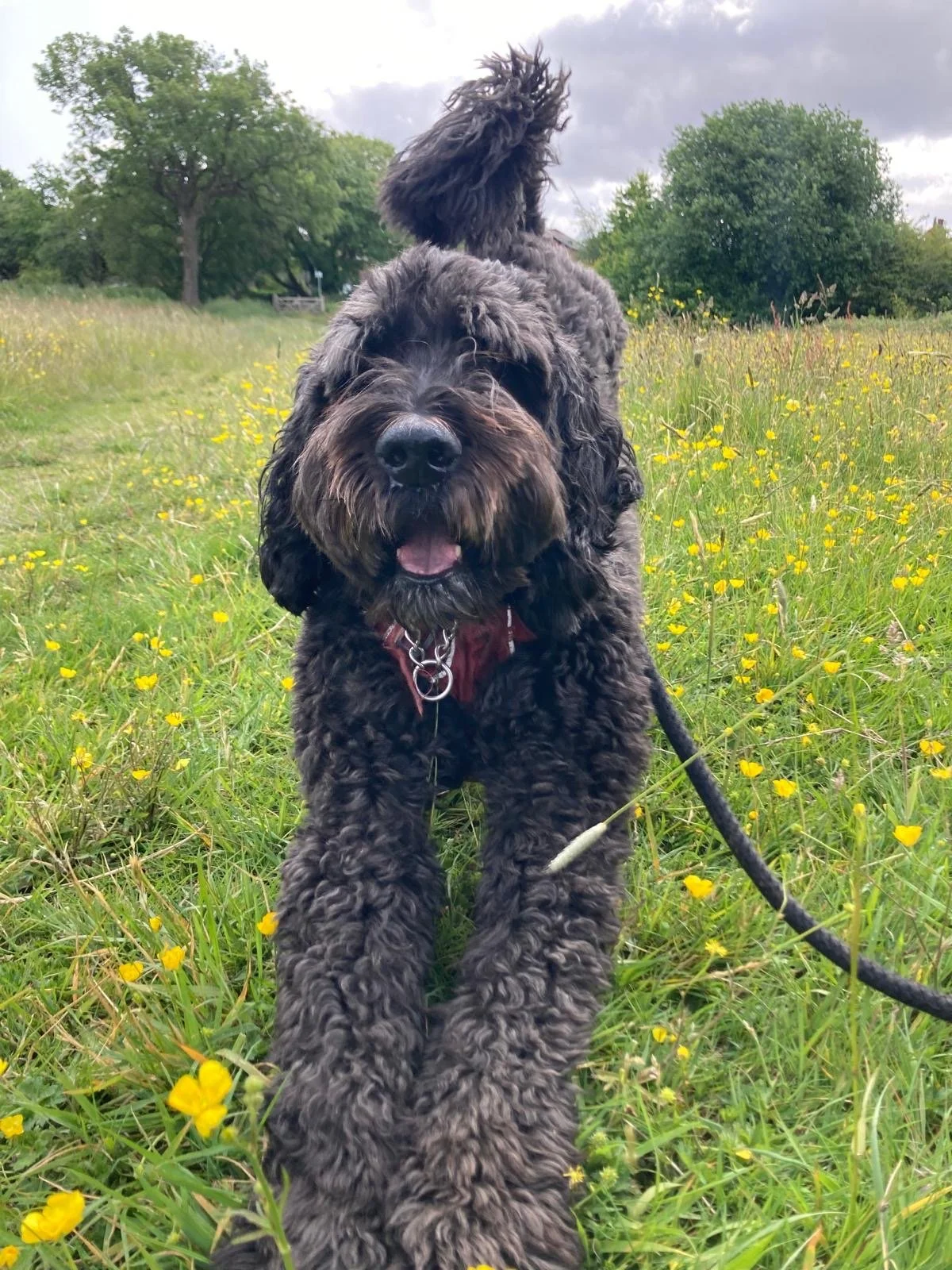
Pain, illness and discomfort can influence how a dog behaves, sometimes in subtle ways. If health could be something contributing to your dog’s difficulties, particularly when behaviour changes suddenly, we may recommend a veterinary assessment before a Mutts Minds behavioural consultation. Understanding any underlying health needs helps us shape appropriate behavioural support around your dogs wellbeing.
✺ Frequently asked questions ✺
-
Mutts Minds focuses on understanding and supporting behavioural and emotional challenges, such as fear, reactivity, separation-related distress and resource guarding. Mutts Momentum offers practical training for puppy foundations, everyday cues, walking skills and confidence in situations such as café visits or travelling. There can be overlap, so if you’re unsure, tell us what’s happening via our contact form and we’ll help you choose the most suitable starting point.
-
Every dog and household is different, so there’s no fixed timeline. Progress depends on your dog’s needs, the behavioural challenges we’re working on and how consistently the plan can be put into practice. We’ll help you set realistic goals and recognise meaningful changes, from settling more easily to recovering more quickly after a difficult moment, while working at a pace your dog can manage.
-
Yes, Mutts Minds is available online to families throughout the UK. Wherever you live, you can access our personalised support from home, without travelling or introducing an unfamiliar visitor into your dog’s environment.
-
We’ll share a link to your online consultation via Google Meet. You’ll join your session at your arranged time and spend 60-90 minutes discussing your dog’s behaviour, what might be driving it, asking questions and agreeing practical ways forward, all with the objective of creating an action plan with realistic goals.
-
Your dog is welcome to relax nearby, but they don’t need to be on camera or demonstrate any behaviour during the consultation. Your pre-consultation form, optional videos and our discussion will help us understand their behaviour and needs, allowing you to focus on the consultation without putting unnecessary pressure on your dog.
-
Within 72 hours, you’ll receive your personalised behavioural action plan and supporting toolkit, giving you clear steps to put into practice, as discussed during your consultation. Each action plan is designed to each dog we work with, at a pace both you and they can manage.